
Your shopping cart is empty! Please select the type which you want.
Home > Industry information > Medical Device Electronics And Sensor Technology For Ventilators
Recently, pneumonia caused by a sudden new coronavirus infection has made the world nervous. To stop the spread of the epidemic and prevent further spread, medical workers are engaged in this fight day and night.
The epidemic of new crown pneumonia around the world is still continuing, and electronic components of medical and health equipment have become the most scarce materials at the moment! C & G Electronics understands the procurement requirements for medical device cardiopulmonary, oximetry, and fluorescence prc related components.
We attach great importance to this, strengthen our service capabilities, deal with emergency orders on the front line of the epidemic, and solve the urgent needs of our customers. The following provides you with a batch of medical and health equipment components, including Vishay, ON, ADI, Microchip, TI, TE and other well-known brands.
| Part Number | Brand | Product Type | |
| 1 | AQZ205 | PANASONIC | Solid State Relay |
| 2 | ADV7391BCPZ | ADI | Codec |
| 3 | TPS622311DRYT | TI | DC / DC converter |
| 4 | ADM3101EACPZ-250R7 | ADI | Interface Chip |
| 5 | FIN1101K8X | ON | Interface Chip |
| 6 | SN74AUP2G17DCKR | TI | Logic Controller |
| 7 | LT3042IDD#PBF | LINEAR | Low Dropout Regulator |
| 8 | AT24C64D-MAHM-T | MICROCHIP | Memory Chip |
| 9 | STM32F429IIT6 | ST | Microcontroller |
| 10 | ADA4430-1YKSZ-R7 | ADI | Operational Amplifier |
| 11 | LT3060IDC-3.3#TRMPBF | ADI | Voltage Regulator Chip |
| 12 | LTC3115IDHD-1#PBF | ADI | Voltage Regulator Chip |
Today, we will introduce you to the ventilator at the same time.
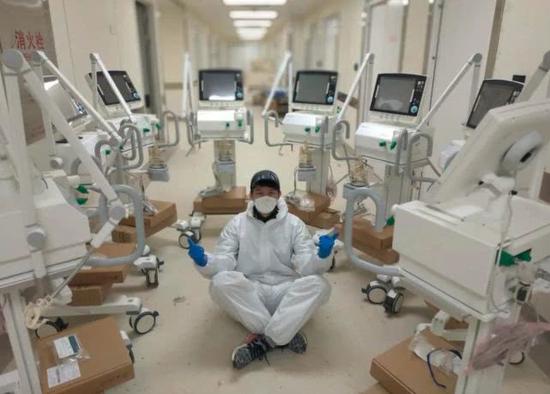
In addition to the necessary medical consumables and protective supplies, auxiliary treatment equipment such as ventilators, monitors, oxygen generators, and negative pressure ambulances have played a significant role in rescuing critically ill patients and suppressing the spread of the virus.
In modern clinical medicine, as an effective means to artificially replace the autonomous ventilation function, it has been widely used in respiratory failure caused by various diseases, anesthesia breathing management during major surgery, and respiratory support treatment. And emergency resuscitation, occupying a very important position in the field of modern medicine. The ventilator is a vital auxiliary medical device that can prevent and treat respiratory failure, reduce complications, save and extend the life of patients. The following seven types of sensors are commonly used in ventilators.
01: Gas flow sensor
This type of sensor monitors the patient's breathing condition, and then sends a signal to the sleep ventilator to reduce the speed of the fan when the patient begins to exhale, reducing the patient's resistance when exhaling, so that the patient does not feel as if he is "combatting" the machine while breathing Produce discomfort. The ventilator uses a gas mass flow sensor to detect the breathing cycle, making the patient more comfortable and therefore more commonly used than a machine without this feature.
The gas mass flow sensor used in the ventilator needs to provide high resolution and accurate sensing capabilities in order to sense weak air flow changes and more precisely control the air flow delivered to the patient. These sensors need to be able to accurately measure the air flow provided and sense the presence or absence of air flow.
Another important consideration is power consumption. The low voltage loss allows the ventilator to be battery powered, which gives patients greater flexibility and freedom of use. Finally, it is important to control the noise emitted by the ventilator motor when the patient is trying to fall asleep. Excessive motor noise or buzzing can affect patient sleep, which is contrary to the original intention of the ventilator. If the pressure drop (voltage drop is equal to the resistance of the sensor) is too sensitive, the motor will work more laboriously, so a gas mass flow sensor and a relatively low pressure drop are required, otherwise it will increase noise and shorten the service life of the motor.
02: SpO2 sensor
SpO2 sensors can help doctors diagnose sleep apnea. Measuring blood oxygen concentration is one of the important signals to measure breathing efficiency during sleep. Sometimes patients complete breathing, but do not inhale enough oxygen to enter the lungs, so the oxygen concentration in the blood decreases significantly. SpO2 sensors include dedicated optoelectronic components and complete sensor solutions. The pulse oximetry (SpO2) product line includes reusable finger clip probes, soft silicone fingertip probes, and a range of disposable sensor assemblies.
03: Pressure Sensor
The pressure sensor in the ventilator mainly converts the airway pressure into a differential signal, and passes the measured value to the circuit MCU to accurately make inhalation and exhalation judgments. After that, the MCU sends instructions to control the intake pump to increase or decrease the pipe pressure. Allows patients to breathe naturally and without resistance.
Measuring respiratory pressure is essential for system operation. During operation, a pumped ventilator can detect changes in breathing pressure and vibrations, such as snoring. Carbon dioxide levels during exhalation can be calculated using a differential pressure sensor. By using a differential pressure sensor that measures a 2-inch water column pressure difference, the CPAP system can better understand the patient's carbon dioxide output to regulate input pressure.
04: Piezo film sensor
Piezo film is particularly suitable for monitoring vital signs, which can be directly attached to the skin or coupled through an intermediate layer. Piezo film has an extremely thin cross section (thickness of 28μm-110μm), is soft, very durable, chemically inert, and can withstand temperatures up to 85 ° C (125 ° C in special processes). Piezo films are used in sleep apnea diagnostic devices and CPAP devices to help doctors and patients understand breathing conditions. Rhythmic breathing is a key indicator of good sleep. Piezoelectric films can detect the state of sleep by measuring vibrations during breathing.
05: Humidity Sensor
The degree sensor can be used to provide a warm, humid air stream that is comfortable for the patient. When moisture is added to the air stream, it must be monitored and controlled. Humidity sensors are used in conjunction with a microcontroller that measures the humidity of the airflow and coordinate with the controller that regulates the humidity to ensure that the airflow has the correct level of humidity.
06: Temperature Sensor
For temperature sensing, ventilator manufacturers can choose from sensing elements that provide patients with warm and humid airflow to improve breathing comfort. Warm and humid air also helps patients reduce sore throat caused by inhaling dry, cold air. Discrete thermistors are usually installed directly in the airflow path to detect the temperature of the airflow. The sensor works with a microcontroller that detects the temperature of the airflow and interacts with the controller that controls and regulates the temperature of the airflow.
07: Magnetic sensor
To make the motor run smoothly, the ventilator uses a fan system to cool the motor components. Magnetic sensors support stable motor control, which reduces noise and vibration generated by the fan system. In addition to improving energy efficiency and providing stable operation, these sensors also realize the design concept of compact, automated and low assembly costs of sleep ventilator products due to their small size.
Industry information
